Devised theatre project
OIL
Mini teater Ljubljana
Schedule
| 03.04.2026 | at 17:00 | Škrlovec Tower |
Crew
Authors of the text: Jan Krmelj, Jernej Potočan, Jernej Gašperin, Diana Kolenc, Mojka Končar, Gašper Lovrec, Lucija Ostan Vejrup, Filip Mramor
Director and music composer: Jan Krmelj
Dramaturg: Jernej Potočan
Stage designer: Lin Japelj
Script of objects animation: Jan Krmelj, Jernej Potočan, Jernej Gašperin, Diana Kolenc, Mojka Končar, Gašper Lovrec, Lucija Ostan Vejrup
Costume designer, visual creation: Brina Vidic
Video interventions: Filp Mramor
Assistant Director (study): Luka Ravnik
Dramaturgy assistent (academic): Gašper Stražišar
Executive producer: Branislav Cerović
Cast
Jernej Gašperin
Diana Kolenc
Mojka Končar
Gašper Lovrec
Lucija Ostan Vejrup
About the performance
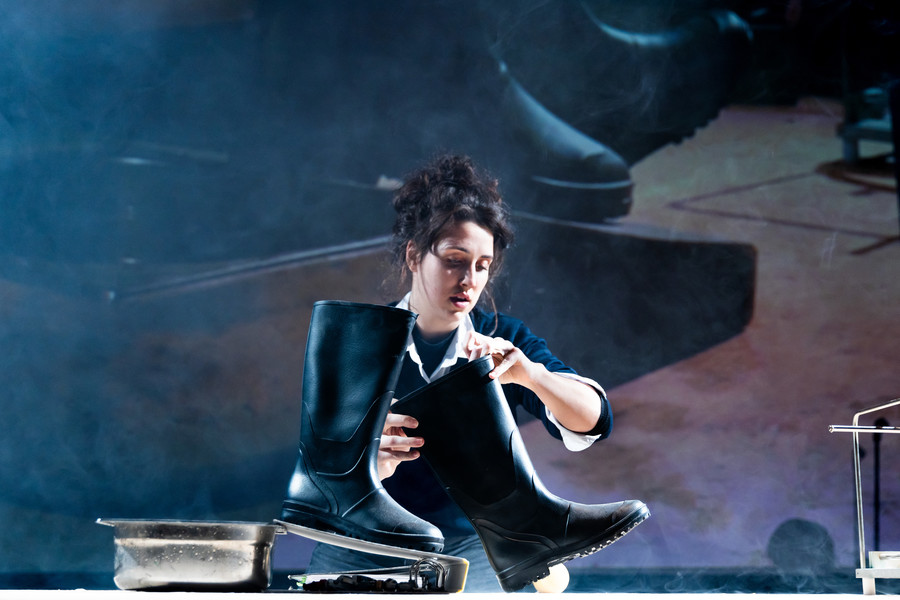
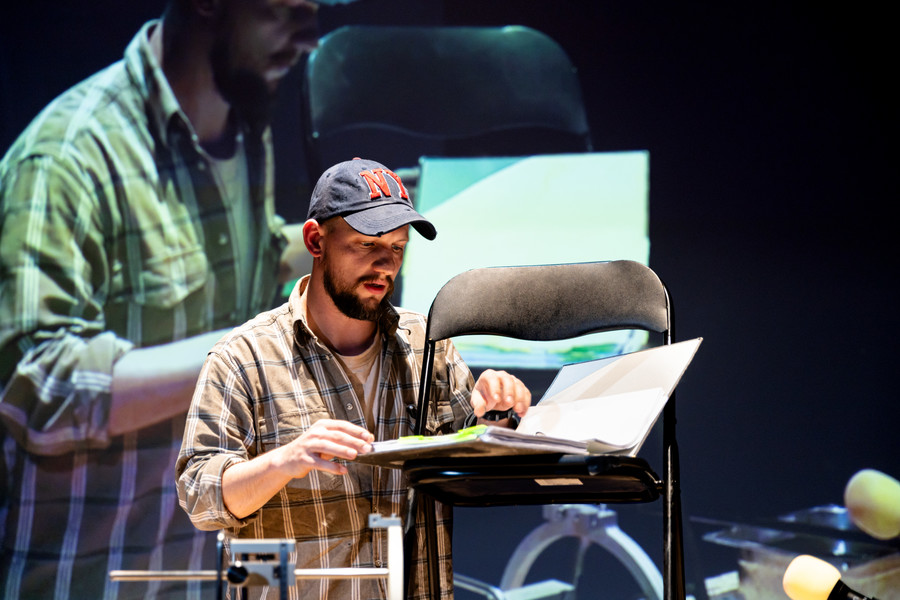
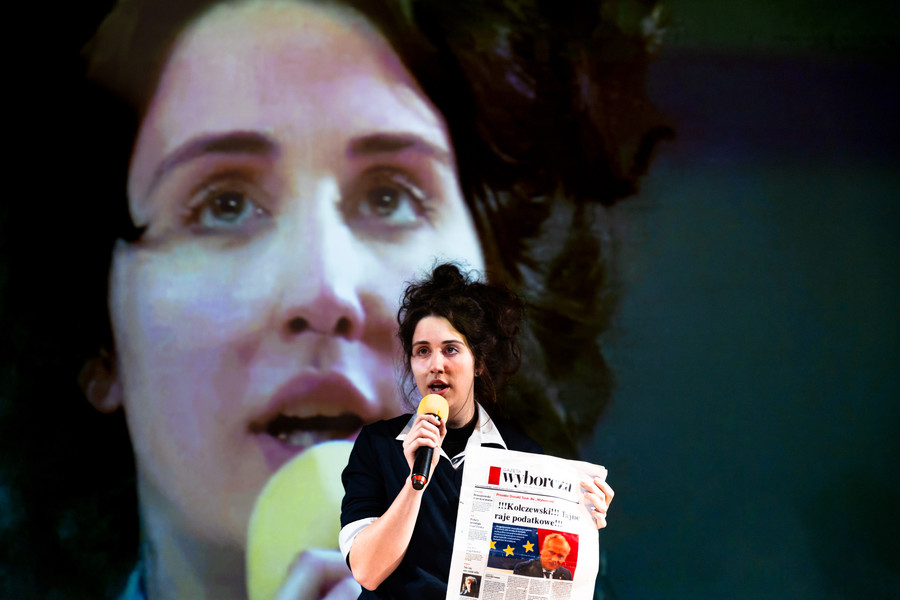
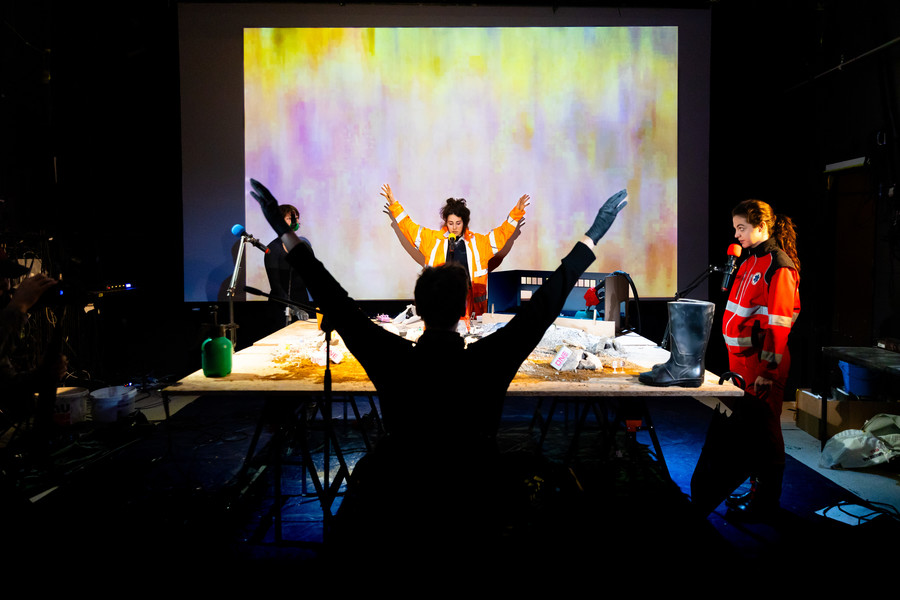
NAFTA/OIL is a performative mosaic that combines lecture procedures, documentary theater, sound installations, and manifest. It is a story about a ready-made called modernity.
The performance explores the intertwined worlds of data capitalism, oil extraction, and radical collective actions. The staging, through two parts, Anthropocene and Pyrocene, draws from an extensive archive where the voices of the subversive podcast (O.I.L.) intersect with the lives and works of members of the artistic collective R.MUTT. The experimental podcast O.I.L, which operated from 2019 to 2023 and established itself as an artwork in a time that continuously erases itself, became widely known with its final episode in December 2023, when the studio and its anonymous host were flooded during a live broadcast.
Oil is a product of geological chance. It is no coincidence that this is also the story of a documentary filmmaker connected to the oil industry, a Russian neurologist torn apart by war, a wealthy Polish anarchist who renounced her past, a German musician who erases his own music as it is created, and a Danish artist whose performance unintentionally enables the rise of actual extremists. Perhaps it is not a coincidence that the exhibition transparency opened their lives to public scrutiny. Beneath layers of smog, under the right pressure, the human brain transforms into a lucid force that tries to unravel the present and can potentially break the cycle of violence. In a world controlled by algorithms and data systems, this break can only occur by chance.
NAFTA is a story about refuges in a time of the end of the world, about a utopia in a time that seemingly allows no alternatives. An autonomous zone within a world that is burning and collapsing inward. The dramaturgy of modernity is the dramaturgy of dementia, a story about a time that accumulates before us like a series of catastrophes.
*
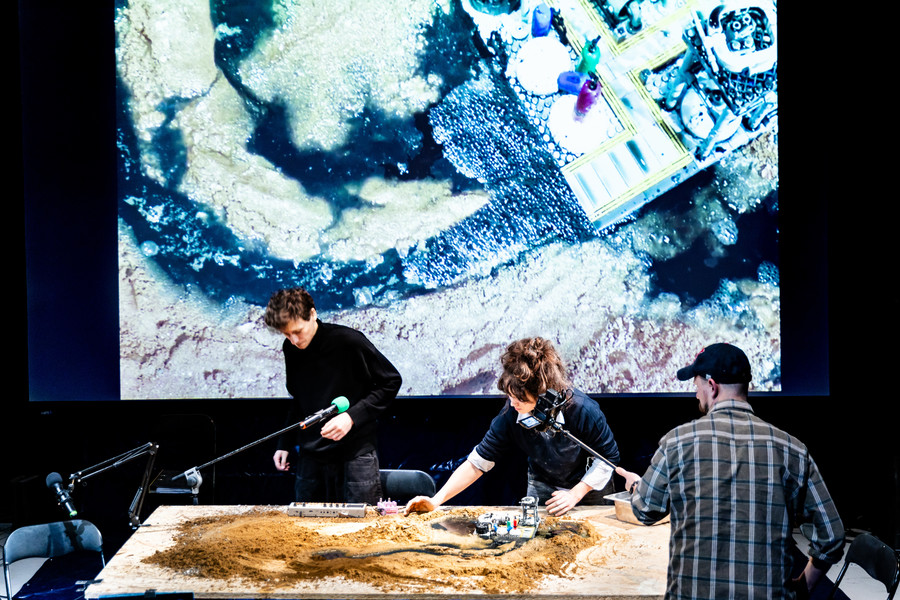
History accumulates like layers of sand: time is a desert. No one knows what the desert hides. The desert is a territory, but also a living organism that changes its shape. Fragments accumulate with the passing of centuries and millennia. And the desert grows. At some point, in the future, it will spread across the world like a web. The desert grows in all directions. According to some mystical traditions, the desert is the land of God: nothing human, nothing vertical, nothing resists gravity. And deep below, somewhere, under the sand, beneath the unimaginable pressures of tectonic plates, one could say: under the pressure of time, from the death of some past, a substance called oil is formed. A dark and thick substance, formed from the remains of ancient plants and animals: a liquid that acts like an organism, although it is not a living being. Oil possesses a kind of artificial intelligence: an uncontrolled entity that manages history; it powers war machines and human engines, causing them to destroy themselves even faster. This substance was formed as an error in the creation of the world, a black hole somewhere in the layers of the earth, a substance that fills the earth's crust and, like a virus, controls the events on the surface.
No one can stop time. When the Pyrocene arrives, oil will turn the Earth into a sun.
Jan Krmelj
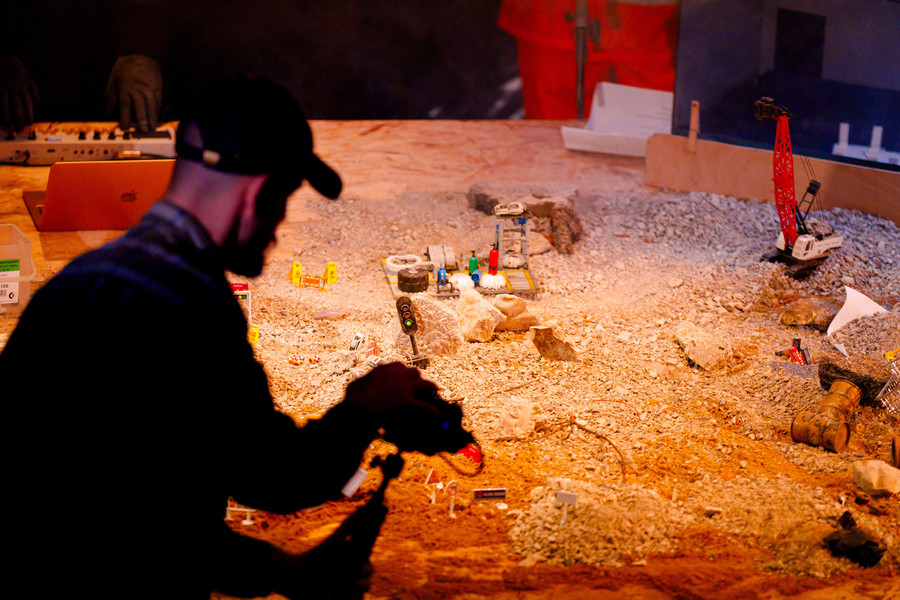
"Director Jan Krmelj and dramaturg Jernej Potočan constructed the performance through hybrid forms of staging. By weaving together lectures, sound installations, podcasts, documentary theatre, and the animation of a miniature world of objects, they continuously questioned how objectivity can be conveyed – or whether it is even possible. The illusion of reality, which the documentary format supposedly represents, remains ever-present in the air. The performance thus raises the question: "What is documentary theatre, and where are its boundaries?" Where exactly is the line between fiction and reality, and where does documentary storytelling fit into this narrative? By layering multiple levels of reality, it also explores the theme of manipulation – something that is impossible to fully escape, even in everyday life. The ground beneath us can shake at any moment, no matter how firmly we believe we have built the strongest foundations. At the same time, the performance opens up questions relevant to the era of internet dominance. We live in a world of data capitalism. After the death of our biological bodies, our virtual selves will still exist. Have we, as humanity, finally achieved infinity? Have we found a way to prevent our own transience, our ability to slip away and die without leaving a digital trace? And if so – can we still call ourselves human?"
Nika Šoštarič, SeeStage
180 minutes, no interval
Photo gallery